Welding Quality in Stainless Steel Tanks
The durability and longevity of stainless steel tanks depend not only on the quality of the steel used (AISI 304/316) but also on the art of joining these steel sheets, namely Welding Quality. In the food, dairy and chemical industries, a faulty weld not only shortens the tank's lifespan but can also become a dangerous breeding ground for bacteria.
As ÖNSA Makine, let us examine why welding quality is critical in hygienic tank production and what standards you should look for, as this forms the basis of our perfectionist production philosophy.
1. The Two Enemies of Flawless Welding: Cracks and Oxidation
A flawless weld must possess the same mechanical and chemical properties as the base material of the steel. Two fundamental issues compromise this quality:
- Crevice Corrosion: Micro-cracks, voids, and imperfections in the weld line cause the fluid to stagnate at these points. Chemical concentration (salt or acid) increases in these stagnant areas, causing corrosion to start faster than in the main material inside the tank.
- Chromium Depletion (Oxidation): Chromium (Passive Layer), which protects stainless steel, moves away from the weld surface to form carbides when exposed to excessive heat during welding. This causes the area immediately adjacent to the weld line to lose its passivation ability, and that area of the tank rusts easily (Weld Bluing).
2. Critical Techniques Required for Hygienic Welding
To avoid creating areas that even CIP (Clean-in-Place) systems cannot clean, professional manufacturers use special welding techniques in hygienic tank production:
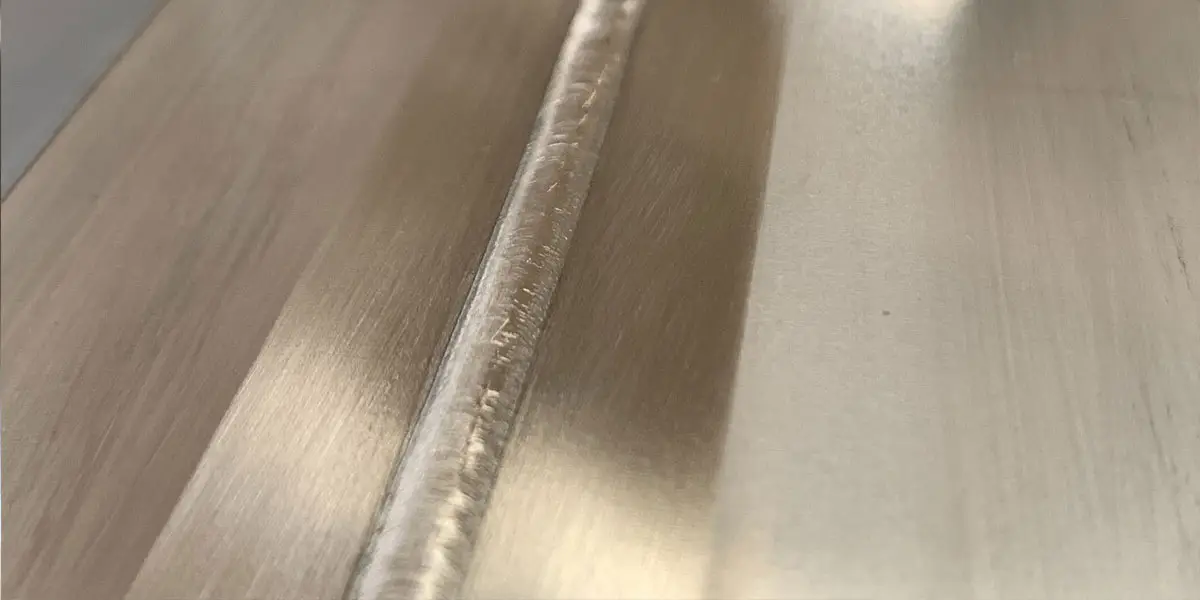
- TIG (Tungsten Inert Gas) Welding: The most preferred method for food and hygienic applications. It creates precise, smooth, and spatter-free welds.
- Internal Protection (Argon Gas Shield): To prevent oxidation of the back side of the molten metal during welding, an inert gas (usually Argon) is pumped into the tank. This ensures a smooth, clean, and corrosion-resistant weld seam both internally and externally.
- Weld Grinding and Polishing: After the weld is completed, the weld surface is mechanically ground and polished to minimise the risk of corrosion and prevent bacterial accumulation, bringing it to the same smoothness as the main surface of the tank.
3. Long-Life Guarantee: Post-Welding Passivation
As mentioned earlier, the welding process damages the protective Passive Layer of the steel. For a tank to be truly long-lasting, the following steps must be taken after welding:
- Pickling: All oxidised, discoloured, and corrosion-prone areas in the weld zone are chemically cleaned.
- Passivation: The tank surface is treated with special acid solutions (nitric or citric acid) to ensure that the damaged passive chromium oxide layer reforms much thicker and faster than it would naturally.
ÖNSA Machine Difference: Each of our tanks is manufactured using Argon-shielded welding from the inside and undergoes all necessary chemical passivation processes after welding to ensure food safety and process quality for many years.
Publication Date: 26.11.2025