The Secret to Efficiency in Heat Recovery
Heat management is the most critical factor directly affecting operational costs in energy-intensive industries such as chemical, textile, and food. Heat exchangers enable the recovery of process waste heat and maximise energy efficiency by transferring energy (heat) between two different fluids.
Heat exchangers manufactured by ÖNSA Makine are designed to increase your process efficiency and reduce your energy costs.
What is a Heat Exchanger and How Does it Work?
Heat exchangers are devices that prevent two fluids, one hot and one cold, from physically mixing with each other, while transferring heat between them via a surface (usually a pipe or plate). This process typically achieves maximum efficiency when the fluids flow in opposite directions (counter-current).
The Two Most Common Types of Heat Exchangers
In industrial applications, two main types of heat exchangers are prominent, depending on the need and the nature of the fluid:
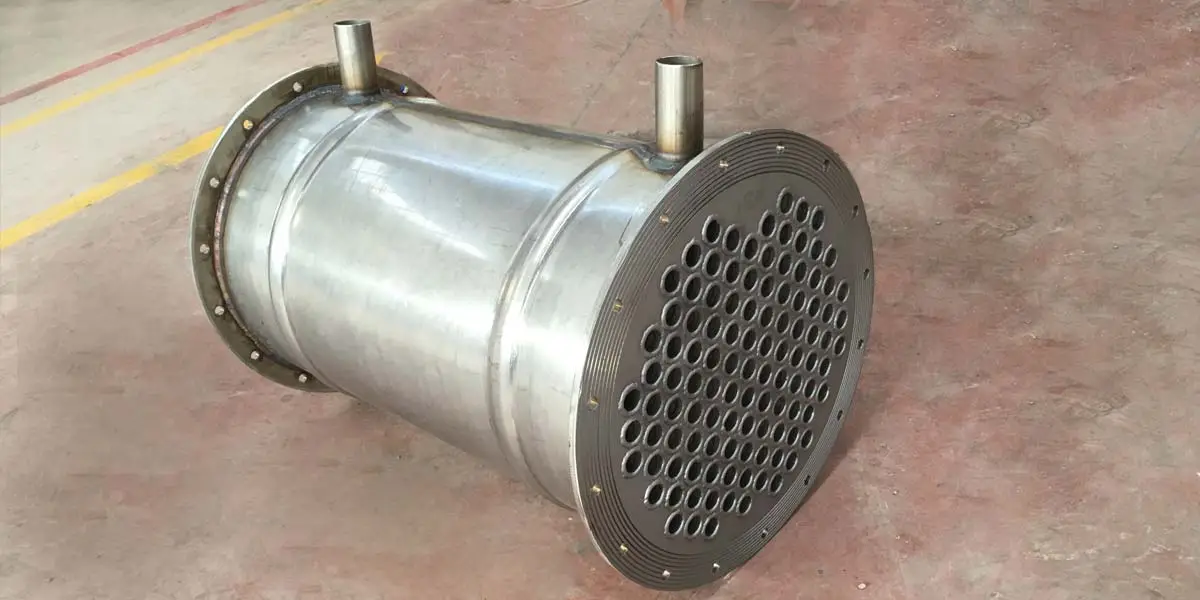
1. Shell and Tube Heat Exchangers (Shell and Tube Heat Exchangers)
Design: A design featuring numerous thin tubes (tubes) within an outer casing (shell). One fluid flows through the tubes, while the other flows around the tubes (through the shell).
Application: Ideal for sectors such as the textile dyeing and chemical industries, where high pressure and high temperature conditions exist, fluids such as steam are used, or dirty/viscous fluids are present. Tube cleaning is easier than with plate heat exchangers.
Advantage: Mechanically robust and resistant to high temperatures/pressures.
2. Plate Heat Exchangers
Structure: Consists of thin, corrugated plates compressed together with gaskets. Fluids flow on both sides of the plates.
Application: Used in areas where hygiene is critical and low-viscosity fluids are present, such as the dairy and food industries. Indispensable for pasteurisation and rapid cooling processes.
Advantage: Offers fast and compact solutions thanks to its high-efficiency heat transfer surface area.
Key Criteria for Selecting the Right Heat Exchanger
Fluid Type and Contamination Tendency: Dirty or fibrous fluids require shell-and-tube heat exchangers, while clean fluids are more efficient in plate heat exchangers.
Pressure and Temperature Limits: Processes requiring high pressure and temperature necessitate the mechanical strength of the shell-and-tube type.
Material Suitability: The use of AISI 316 stainless steel is essential for surfaces in contact with chemicals to prevent corrosion and ensure a long service life.
ÖNSA Makine determines the most suitable type and size of heat exchanger for your specific process conditions (flow rate, temperature difference, and fluid type) through engineering calculations and integrates it into your projects.